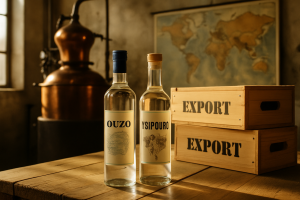
The most recognisable name in Greek ouzo is placing a serious bet on its grape-based cousin. Ouzo Plomari Isidoros Arvanitis, the Lesvos house behind the country’s leading ouzo, is investing about €6.2 million in a dedicated tsipouro distillery in Thessaly — a move that pushes the company deeper into a category with strong export tailwinds.
The logic is written in the company’s own numbers. Exports already account for more than half of sales, and Plomari ships to over 45 countries, from Iceland to Chile, South Africa and Thailand. Germany and Iraq rank among its largest markets, with the United States, Canada, Australia, the UK and Bulgaria all significant — in Bulgaria the brand sits second only to a global whisky.
Why tsipouro, why now
At home, the picture is tougher. Greek ouzo consumption has fallen dramatically over the past decade and a half, pushing producers to chase growth abroad and to widen their portfolios. Tsipouro — increasingly fashionable in bars and on export shelves — is a natural next step for a company that already produces the Dekaraki tsipouro alongside its ouzo range.
A Thessaly base is no accident either: the region is one of Greece’s historic tsipouro heartlands, close to raw material and to a distilling tradition the brand can credibly claim.
A portfolio playing offense
Plomari’s line-up already reaches beyond the classic bottle: the triple-distilled premium Adolou, Ouzo Matarelli, the Dekaraki tsipouro and the Axia mastic spirit. The new distillery signals that the next chapter of Greece’s ouzo champion will be written as much in grape as in anise — and increasingly, for the world.